Buy dachsanierung.eu ?
We are moving the project
dachsanierung.eu .
Are you interested in purchasing the domain
dachsanierung.eu ?
domain@kv-gmbh.de · 0541-91531010
Buy dachsanierung.eu ?
Is hydrochloric acid an acid according to Brønsted and a proton donor?
Yes, hydrochloric acid is considered an acid according to Brønsted theory as it can donate a proton (H+ ion) in a chemical reaction. In the reaction where hydrochloric acid (HCl) dissolves in water, it donates a proton to water molecules, forming hydronium ions (H3O+) and chloride ions (Cl-). This proton donation is what classifies hydrochloric acid as an acid according to Brønsted theory. **
When is a proton released and when is one accepted? (Brønsted acid-base principle)
According to the Brønsted acid-base principle, a proton is released when an acid donates a proton to a base. This process results in the acid being converted into its conjugate base. On the other hand, a proton is accepted when a base receives a proton from an acid. This results in the base being converted into its conjugate acid. In summary, acids release protons while bases accept protons in Brønsted acid-base reactions. **

Similar search terms for Brønsted Proton
Top-Angebote
Products related to Brønsted Proton:
-
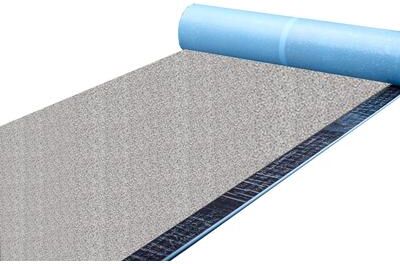
CertainTeed Roofing CertainTeed Flintlastic SA Cap Peel & Stick Roofing White - Single RollThe CertainTeed Flintlastic SA Cap Peel & Stick Roofing Membrane is a premium self-adhering SBS modified bitumen roofing membrane meant for use with most low slope roof systems. This Peel and Stick Cap Roofing is available in 9 different color...182,83 $*Shipping: 0,00 $Secure redirect to the provider
-
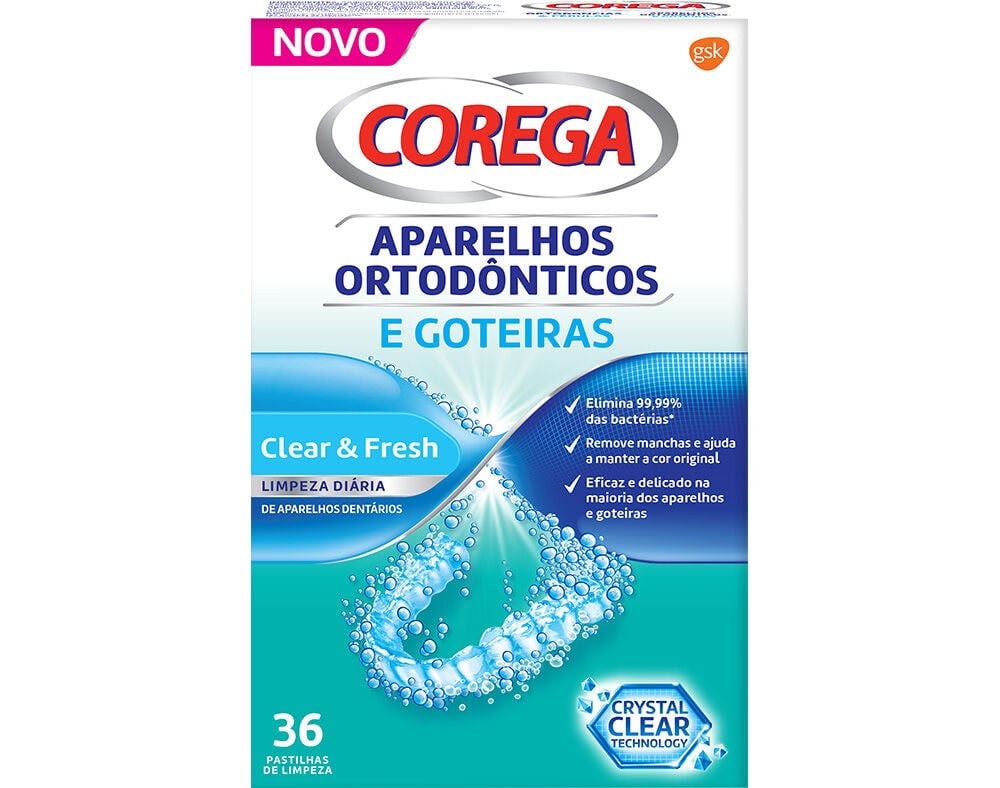
Corega Cleansing Tablets Orthodontic and Gutters 36 un.A food supplement. Orthodontic and Drip Cleaning Tablets allow you to eliminate 99.9% of bacteria, while also helping to remove difficult spots and maintain the original color. Its composition is smooth for the material that constitutes the dental gutters and orthodontic appliances, preserving its integrity throughout the uses.8,77 £*Shipping: 5,22 £Secure redirect to the provider
-
Dakota Fields Rust Resistant Roofing KitAn economical and robust solution for any application, such as sheds, awnings, greenhouses, or garage walls and cladding! The lightweight single-layer roof sheets have no pre-drilled holes, offering flexibility to punch holes for installation according to specific needs, enabling super-fast and easy installation. The roofing sheets undergo galvanization and coating treatment, which enhances their durability and resistance to weathering. Corrugated garage shed is resistant to oxidation, corrosion, deformation or aging, ensuring long-term use.. Each product consists of 14pcs sheets. The size of each piece is 110*46cm. The thickness is 0.25mm. Each set of product can cover an area of approximately 7m² after assembly.. The multiple vertical trapezoidal grooves greatly enhance drainage and runoff, ensuring that water won't become trapped on your roof. This provides optimal protection against rain and other stormy weather.. Brand Name: Dakota Fields.63,99 £*Shipping: 0,00 £Secure redirect to the provider
-
Symple Stuff Rust Resistant Roofing KitThis pack of 12 corrugated roof sheets is ideal for all domestic, agricultural, and industrial buildings. The roof sheets are made from rust-proof galvanized metal and have a high load capacity which is perfect for general roofing and walling applications. These roof sheets are 115cm x 45cm in size and 0.3mm in thickness. They are suitable for sheds, workshops, greenhouses, barns, carports, huts, kennels, garages, etc. Note: Please wear gloves when using this product to prevent scratching the fingers. SPECIFICATION Colour: Black Material: Metal, galvanized Dimensions (LxW): 1150mm x 450mm Thickness: 0.3 mm Type: Roofing. SPECIFICATION Colour: Black Material: Metal, galvanized Dimensions (LxW): 1150mm x 450mm Thickness: 0.3 mm Type: Roofing. PACKAGE CONTENT 1 x 12 Roof Sheets. Brand Name: Symple Stuff.46,99 £*Shipping: 4,99 £Secure redirect to the provider


-
What are the structural characteristics of Brønsted bases and Brønsted acids?
Brønsted bases have a lone pair of electrons that can be donated to a proton, while Brønsted acids have a hydrogen ion that can be donated to a base. Both Brønsted bases and acids are characterized by the ability to donate or accept protons, respectively. The structural characteristics of Brønsted bases include having a lone pair of electrons available for bonding, while Brønsted acids typically have a hydrogen atom bonded to an electronegative atom. **
-
What determines a proton donor and a proton acceptor?
A proton donor is a substance that can release a proton (H+) in a chemical reaction, while a proton acceptor is a substance that can accept a proton. This ability is determined by the presence of a hydrogen atom with a positive charge (H+) in the molecule. In general, substances with a lone pair of electrons, such as a hydroxide ion (OH-) or an amine group (NH2), can act as proton acceptors, while substances with a hydrogen atom bonded to an electronegative atom, such as a hydrochloric acid (HCl) or acetic acid (CH3COOH), can act as proton donors. **
-
What is proton donation and proton acceptance in chemistry?
Proton donation and proton acceptance are key concepts in acid-base chemistry. Proton donation refers to the transfer of a hydrogen ion (proton) from one substance to another. This typically occurs when an acid donates a proton to a base. Proton acceptance, on the other hand, involves the acceptance of a proton by a substance, often a base, leading to the formation of a new chemical species. These processes are fundamental to understanding the behavior of acids and bases in chemical reactions. **
-
What is meant by proton donors and proton acceptors?
Proton donors are substances that can donate a proton (H+) to another substance. This typically involves the release of a hydrogen ion. Proton acceptors, on the other hand, are substances that can accept a proton from another substance. This typically involves the uptake of a hydrogen ion. In the context of acid-base reactions, proton donors are acids, while proton acceptors are bases. **

Are there only proton-proton collisions in the particle accelerator?
No, there are not only proton-proton collisions in the particle accelerator. Particle accelerators can also collide protons with other particles such as electrons or heavy ions like lead or gold. These collisions are important for studying different aspects of particle physics and for exploring the fundamental forces and particles that make up the universe. By colliding different types of particles, scientists can gain a better understanding of the fundamental building blocks of matter and the forces that govern their interactions. **
Why are carboxylic acids proton donors and amines proton acceptors?
Carboxylic acids are proton donors because they contain a highly electronegative oxygen atom that can stabilize the resulting carboxylate anion by delocalizing the negative charge. Amines, on the other hand, are proton acceptors because they contain a lone pair of electrons on the nitrogen atom that can readily accept a proton to form a positively charged ammonium ion. This ability to donate or accept protons is due to the presence of functional groups in these molecules that can easily gain or lose a hydrogen ion in solution. **
Top-Angebote
Products related to Brønsted Proton:
-
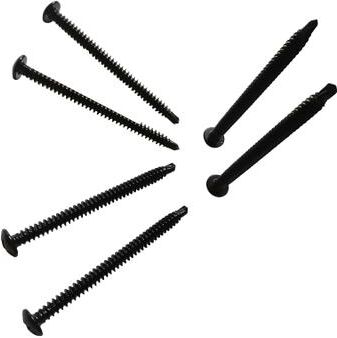
HydroShield Building Products HydroShield Heavy Duty Roofing Insulation Screws #14-2 Inch-Tub of 1 000The HydroShield Heavy Duty Roofing Insulation Screws are self-drilling screws designed to fasten insulation coverboards base sheets and single-ply roof membrane systems. These roof fasteners are available in #14 heavy duty or #15 extra heavy duty...92,26 $*Shipping: 0,00 $Secure redirect to the provider
-
Tools, Home & Hobby Professional Roofing Nailer 15 Degree Pneumatic Coil Roofing Nail Gun Professional Roofing Nailer 15 Degree Pneumatic Coil Roofing Nail GunMake roofing projects faster and easier with a reliable tool built for precision and efficiency. This professional roofing nailer is designed for contractors, builders, and DIY users who need consistent performance for shingles, sheathing, and wood...269,97 $*Shipping: 0,00 $Secure redirect to the provider
-
CertainTeed Roofing CertainTeed Flintlastic SA Cap Peel & Stick Roofing White - Single RollThe CertainTeed Flintlastic SA Cap Peel & Stick Roofing Membrane is a premium self-adhering SBS modified bitumen roofing membrane meant for use with most low slope roof systems. This Peel and Stick Cap Roofing is available in 9 different color...182,83 $*Shipping: 0,00 $Secure redirect to the provider
-
Corega Cleansing Tablets Orthodontic and Gutters 36 un.A food supplement. Orthodontic and Drip Cleaning Tablets allow you to eliminate 99.9% of bacteria, while also helping to remove difficult spots and maintain the original color. Its composition is smooth for the material that constitutes the dental gutters and orthodontic appliances, preserving its integrity throughout the uses.8,77 £*Shipping: 5,22 £Secure redirect to the provider
-
Is hydrochloric acid an acid according to Brønsted and a proton donor?
Yes, hydrochloric acid is considered an acid according to Brønsted theory as it can donate a proton (H+ ion) in a chemical reaction. In the reaction where hydrochloric acid (HCl) dissolves in water, it donates a proton to water molecules, forming hydronium ions (H3O+) and chloride ions (Cl-). This proton donation is what classifies hydrochloric acid as an acid according to Brønsted theory. **
-
When is a proton released and when is one accepted? (Brønsted acid-base principle)
According to the Brønsted acid-base principle, a proton is released when an acid donates a proton to a base. This process results in the acid being converted into its conjugate base. On the other hand, a proton is accepted when a base receives a proton from an acid. This results in the base being converted into its conjugate acid. In summary, acids release protons while bases accept protons in Brønsted acid-base reactions. **
-
What are the structural characteristics of Brønsted bases and Brønsted acids?
Brønsted bases have a lone pair of electrons that can be donated to a proton, while Brønsted acids have a hydrogen ion that can be donated to a base. Both Brønsted bases and acids are characterized by the ability to donate or accept protons, respectively. The structural characteristics of Brønsted bases include having a lone pair of electrons available for bonding, while Brønsted acids typically have a hydrogen atom bonded to an electronegative atom. **
-
What determines a proton donor and a proton acceptor?
A proton donor is a substance that can release a proton (H+) in a chemical reaction, while a proton acceptor is a substance that can accept a proton. This ability is determined by the presence of a hydrogen atom with a positive charge (H+) in the molecule. In general, substances with a lone pair of electrons, such as a hydroxide ion (OH-) or an amine group (NH2), can act as proton acceptors, while substances with a hydrogen atom bonded to an electronegative atom, such as a hydrochloric acid (HCl) or acetic acid (CH3COOH), can act as proton donors. **
Similar search terms for Brønsted Proton
-
Dakota Fields Rust Resistant Roofing KitAn economical and robust solution for any application, such as sheds, awnings, greenhouses, or garage walls and cladding! The lightweight single-layer roof sheets have no pre-drilled holes, offering flexibility to punch holes for installation according to specific needs, enabling super-fast and easy installation. The roofing sheets undergo galvanization and coating treatment, which enhances their durability and resistance to weathering. Corrugated garage shed is resistant to oxidation, corrosion, deformation or aging, ensuring long-term use.. Each product consists of 14pcs sheets. The size of each piece is 110*46cm. The thickness is 0.25mm. Each set of product can cover an area of approximately 7m² after assembly.. The multiple vertical trapezoidal grooves greatly enhance drainage and runoff, ensuring that water won't become trapped on your roof. This provides optimal protection against rain and other stormy weather.. Brand Name: Dakota Fields.63,99 £*Shipping: 0,00 £Secure redirect to the provider
-
Symple Stuff Rust Resistant Roofing KitThis pack of 12 corrugated roof sheets is ideal for all domestic, agricultural, and industrial buildings. The roof sheets are made from rust-proof galvanized metal and have a high load capacity which is perfect for general roofing and walling applications. These roof sheets are 115cm x 45cm in size and 0.3mm in thickness. They are suitable for sheds, workshops, greenhouses, barns, carports, huts, kennels, garages, etc. Note: Please wear gloves when using this product to prevent scratching the fingers. SPECIFICATION Colour: Black Material: Metal, galvanized Dimensions (LxW): 1150mm x 450mm Thickness: 0.3 mm Type: Roofing. SPECIFICATION Colour: Black Material: Metal, galvanized Dimensions (LxW): 1150mm x 450mm Thickness: 0.3 mm Type: Roofing. PACKAGE CONTENT 1 x 12 Roof Sheets. Brand Name: Symple Stuff.46,99 £*Shipping: 4,99 £Secure redirect to the provider
-
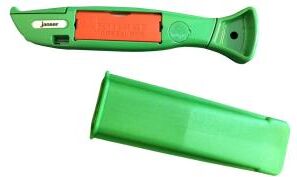
Janser Non-Retractable Green Roofing KnifeThe Janser Non-Retractable Green Knife is a dependable heavy-duty roofing tool designed to handle demanding cutting tasks on the jobsite. Built with durable steel construction this professional roofing knife delivers the strength and reliability...47,98 $*Shipping: 0,00 $Secure redirect to the provider
-
Sievert 2960 Roofing Gas Blow Torch BurnerSievert 2960 Roofing Gas Blow Torch Burner - Heavy-Duty Power Burner The Sievert 2960 Roofing Gas Blow Torch Burner is a heavy-duty, lightweight power burner designed for extreme performance in challenging conditions. With an exceptionally strong and windproof flame, this burner is perfect for demanding applications like drying, bitumen laying, field torching, and preheating. Constructed from high-quality stainless steel, the Sievert 2960 is built to withstand the toughest environments, ensuring durability and efficiency for professional use. Pair it with the Sievert Pro neck tubes and 3488 handle for gas-saving pilot flame functionality and instant trigger operation between pilot and main flames. Key Features:46,45 £*Shipping: 5,00 £Secure redirect to the provider
-
What is proton donation and proton acceptance in chemistry?
Proton donation and proton acceptance are key concepts in acid-base chemistry. Proton donation refers to the transfer of a hydrogen ion (proton) from one substance to another. This typically occurs when an acid donates a proton to a base. Proton acceptance, on the other hand, involves the acceptance of a proton by a substance, often a base, leading to the formation of a new chemical species. These processes are fundamental to understanding the behavior of acids and bases in chemical reactions. **
-
What is meant by proton donors and proton acceptors?
Proton donors are substances that can donate a proton (H+) to another substance. This typically involves the release of a hydrogen ion. Proton acceptors, on the other hand, are substances that can accept a proton from another substance. This typically involves the uptake of a hydrogen ion. In the context of acid-base reactions, proton donors are acids, while proton acceptors are bases. **
-
Are there only proton-proton collisions in the particle accelerator?
No, there are not only proton-proton collisions in the particle accelerator. Particle accelerators can also collide protons with other particles such as electrons or heavy ions like lead or gold. These collisions are important for studying different aspects of particle physics and for exploring the fundamental forces and particles that make up the universe. By colliding different types of particles, scientists can gain a better understanding of the fundamental building blocks of matter and the forces that govern their interactions. **
-
Why are carboxylic acids proton donors and amines proton acceptors?
Carboxylic acids are proton donors because they contain a highly electronegative oxygen atom that can stabilize the resulting carboxylate anion by delocalizing the negative charge. Amines, on the other hand, are proton acceptors because they contain a lone pair of electrons on the nitrogen atom that can readily accept a proton to form a positively charged ammonium ion. This ability to donate or accept protons is due to the presence of functional groups in these molecules that can easily gain or lose a hydrogen ion in solution. **
* All prices are inclusive of VAT and, if applicable, plus shipping costs. The offer information is based on the details provided by the respective shop and is updated through automated processes. Real-time updates do not occur, so deviations can occur in individual cases. ** Note: Parts of this content were created by AI.